Sunbelt Stud Welding
1-800-462-9353
www.sunbeltstudwelding.com

Automated Welding Machine

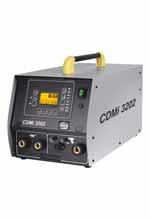
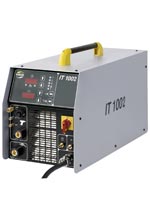
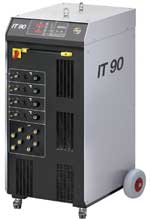
Automated welding systems combine a CNC-controlled positioning platform with a Capacitor Discharge (CD) or ARC stud welding power source to run stud welds on programmed X/Y coordinates with minimal operator input. These machines streamline high-volume manufacturing by integrating programmable controls, automatic stud feeding, CNC positioning, and robotic motion into a repeatable welding process.

Sunbelt Stud Welding supplies automated welding machines and components engineered for ARC and Capacitor Discharge stud welding applications for manufacturers who need repeatable stud placement at production volume without the cost or footprint of a full robotic welding cell.
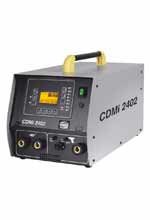
Automated Welding Solutions

What Is an Automated Welding Machine?

An automated welder is a stud welding machine engineered to run with minimal manual input. Instead of an operator hand-positioning a welding gun for every cycle, an automated welder uses CNC-driven axes, automatic stud feeding, and programmable weld schedules to place and weld studs at a fixed, repeatable cycle time. This is different from a fully robotic welding cell, which adds a 6-axis industrial robot for parts with complex, non-linear stud layouts. Welding automation is the right choice when stud locations are fixed or follow a defined grid.

Material Compatibility

Carbon Steel
Mild Steel
Stainless Steel
Galvanized Steel
Aluminum
AUTOMATED WELDING SYSTEM ARCHITECTURE
Component Functions
  • Stud Welding Machine: Performs ARC or Capacitor Discharge stud welding
  • CNC or Robot: Controls positioning
  • Automatic Stud Feeder: Delivers studs automatically for continuous operation
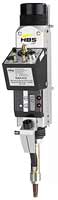
  • Welding Head: Positions and welds the fastener
  • PLC & HMI: Controls machine logic, diagnostics, and production settings
  • Safety System: Manages guarding, interlocks, and emergency stops
TECHNICAL SPECIFICATIONS
Note Exact specifications vary by model and automation level.
Welding Process Capacitor Discharge (CD), Short Cycle (SC), Drawn Arc (Arc)
Stud Diameter Range CD: 14 ga to 3/8" (M3–M10) | Arc: 1/8" to 1/2" (M3–M12)
Axes of Motion Single-head CNC (X/Y) up to multi-head CNC (X/Y/Z, multiple stations)
Feed System Pneumatic or mechanical automatic stud feed
Control Interface PLC / HMI with programmable weld schedules and part programs
Positioning CNC Axis or 6-Axis Robot
Communication Digital I/O, PLC integration, Ethernet/IP
Duty Cycle Continuous production duty cycle
Quality Monitoring Real-time weld parameter logging
INDUSTRIAL APPLICATIONS
Industry Typical Applications
Automotive Chassis, battery trays, brackets
Structural Steel Shear connectors, anchor studs
Heavy Equipment Machinery and fabricated frames
HVAC Panels, insulation pins
Electrical Cabinets, switchgear, grounding studs
OEM Manufacturing Production assemblies and fabricated components
Aerospace Airframe brackets, panel fasteners, lightweight structural studs
Defense Military-grade weld studs, armored vehicle fabrication, shipboard components
Appliance Manufacturing Enclosures, panel assemblies, mounting studs for washers, dryers, and ranges
Rail Car body panels, floor studs, grounding and cable-hanger applications
Renewable Energy Wind tower internals, solar racking, battery enclosure fasteners
Food Equipment Stainless steel panels, sanitary enclosures, corrosion-resistant stud applications

Frequently Asked Questions

Yes. Welding automation equipment connects via PLC/I-O signals, conveyor sync, and protocols such as Ethernet/IP or Profinet, allowing stud welding automation to fit into existing fixtures and lines without a full redesign.

Yes. A single stud welding machine handles multiple diameters, typically M3–M25 drawn-arc or up to 10mm CD, by adjusting current, lift, and plunge, using interchangeable chucks or ferrules per job.

Routine care for a stud welder includes chuck and gun tip inspection, ferrule replacement, cable checks, and current/timing calibration. Most automated welding machines need service every 500–2,000 weld cycles.

CD cycles run 1–6 milliseconds of arc time; drawn-arc runs 0.1–0.6 seconds. A CNC stud welder or robotic cell typically completes 300–2,500 welds per hour, depending on stud size and setup.

Yes. Welding automation systems log current, voltage, arc time, and plunge depth/per weld, flagging deviations beyond ±5–10% tolerance, giving stud welding automation a traceable quality record for every part.

A welding CNC machine moves on fixed X/Y/Z axes for flat, repetitive layouts. Robotic automated welding systems use 6-axis arms for complex geometry. CNC suits high volume; robots suit varied designs.

An automated welder combines programmable controls, positioning systems, and a stud welding machine to perform repeatable welding cycles with minimal operator involvement.

Yes. Stud welding can be automated using CNC systems, robotic welding cells, automatic stud feeders, PLC controls, and production line integration.

Automated systems support ARC stud welding, Capacitor Discharge (CD) stud welding, and Short Cycle ARC welding depending on the application.

Automotive, aerospace, fabrication, HVAC, electrical manufacturing, and OEM fabrication.

Accuracy depends on the positioning system and fixture design. CNC systems and industrial robots typically deliver highly repeatable stud placement for demanding production environments.

Why Manufacturers Choose Automated Stud Welding

  • Labor Shortages: Skilled manual stud welding operators are harder to find and retain. Automated welding systems reduce dependence on specialized manual technique since the equipment controls weld quality, not the operator.
  • Increased Throughput: Automated welding machines sustain 300–2,500 welds per hour depending on process and stud size, without the breaks, fatigue, or pace variation of manual welding.
  • Better Consistency: Programmed current, plunge depth, and arc time (0.1–0.6 sec drawn-arc; 1–6 ms CD) hold every weld to the same parameters, eliminating operator-to-operator variation.
  • Lower Scrap: Controlled, repeatable weld schedules reduce cold welds, incomplete fusion, and misalignment, which are common causes of rework in manual stud welding.
  • Traceability: Automated welding solutions log current, voltage, and timing/ per weld, creating a documented quality record for every stud rather than relying on visual inspection alone.
  • Easier Operator Training: Operators manage a programmed system rather than mastering manual gun angle, timing, and technique, shortening training time and reducing skill-dependent quality gaps.

Benefits of Automated Welding Machines

Automation improves weld quality by controlling every stage of the welding cycle while reducing manual handling and production variation.

  • Consistent weld current, voltage, and lift/plunge across every cycle
  • Lower scrap and rework rates
  • Logged weld data for traceability and QC
  • Lower cost-per-weld at volume
  • Scalable from single-head to multi-head CNC
  • Improved operator safety
  • Digital process monitoring

CNC vs. Robotic Stud Welding

Factor CNC Automation Robotic Automation
Motion Path Fixed X/Y/Z coordinate patterns 6-axis articulated arm, complex 3D paths
Part Geometry Flat panels, tubes, repetitive layouts Curved, angled, multi-plane surfaces
Setup Time Faster. Fixed program per part family Slower. Requires path programming per part
Changeover New fixture/program needed per part change Reprogrammed via software, no new fixture
Investment $60K–$180K per station $150K–$400K+ per cell (robot + welder + integration)
Flexibility Low. Built for one part layout High. Handles multiple part designs in one cell
Best Fit High-volume, repetitive production Mixed production, varied part geometry

How Stud Welding Automation Works

  • Part Loading: The workpiece is fixed in a jig, fixture, or CNC table.
  • Positioning: A CNC stud welder moves the welding head to programmed X/Y (and Z) coordinates.
  • Stud Feeding: An automatic feeder delivers the correct stud through a pneumatic or mechanical feed line.
  • Welding: The stud welding automation machine fires a controlled CD or Arc weld cycle based on programmed current, voltage, and lift/plunge settings.
  • Verification: Weld parameters are logged and monitored for quality control before the head advances to the next point.

Welding Automation Technologies

Modern automated welding systems combine intelligent controls, inverter power sources, servo motion, and digital process monitoring for repeatable stud welding.

Technology Technical Function
Microprocessor-Controlled Inverter Regulates weld current, voltage, and weld time with programmable accuracy.
Automatic Stud Feeding Pneumatic blow-feed system with stud presence verification for continuous operation.
Servo Motion Control Coordinates CNC axes or robotic movement for repeatable stud positioning.
PLC & HMI Integration Centralizes machine control, diagnostics, parameter storage, and production monitoring.
Digital Process Monitoring Records weld current, voltage and weld time for traceability.
Industrial Communication Supports Digital I/O, EtherNet/IP, PROFINET, EtherCAT, and PLC integration.
Quality Verification Monitors process parameters to identify weld deviations before production continues.
Modular Automation Integrates with conveyors, indexing tables, vision systems, and robotic work cells.

Get Complete Automated Welding Solutions

Send us your stud type, material, and target cycle time. Sunbelt Stud Welding will match you with the ideal automated welding machine and quote the configuration.

Call: 713-939-8903